
Stay Tick Free
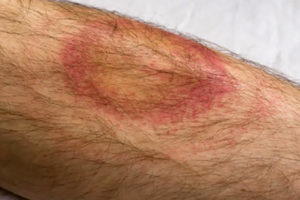
- Lyme Disease: diagnosis and treatment Sunday, 8 July 2012, Sydney Lyme di...
- Wear light-coloured clothing so you can see small ticks, especially nymphs....
- Tuck your pants into your socks so ticks can’t get onto your legs....
- Wear a long-sleeved shirt and tuck it inside your pants....
- Spray insecticide containing permethrin (an insecticide) on boots and clothing. ...
- Apply insect repellent containing DEET (not on children) to your skin. Bec...
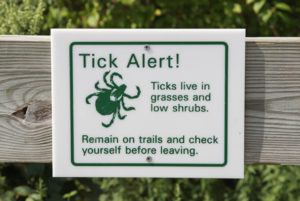
- Look for ticks on your body, including in your hair, when you return from hiking...
- Check children and pets for ticks....
- Discourage bandicoots, wallabies and other small animals around your house....
- Cut grass and trim the shrubs and small trees round your house to minimise conta...
- Be alert and aware of ticks on you, so you can remove them as soon as possible....
Australian Lyme Disease

The Australian Government is monitoring Lyme disease, in consultation with the states and territories, through the Communicable Diseases Network Australia.
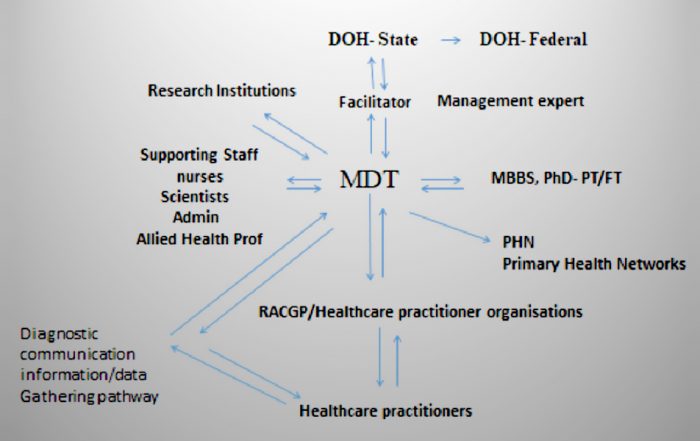
The Australian Government Chief Medical Officer, Professor Chris Baggoley, has established a Clinical Advisory Committee on Lyme disease to provide him with advice on the evidence for Lyme disease in Australia, diagnostic testing, treatment and research requirements. The Committee will also provide advice on the most appropriate ways to disseminate information to health professionals and the general public.
These Terms of Reference were ratified by the members of the committee who met on 19 March 2013.
The purpose of the CACLD is to provide advice to the Chief Medical Officer on:
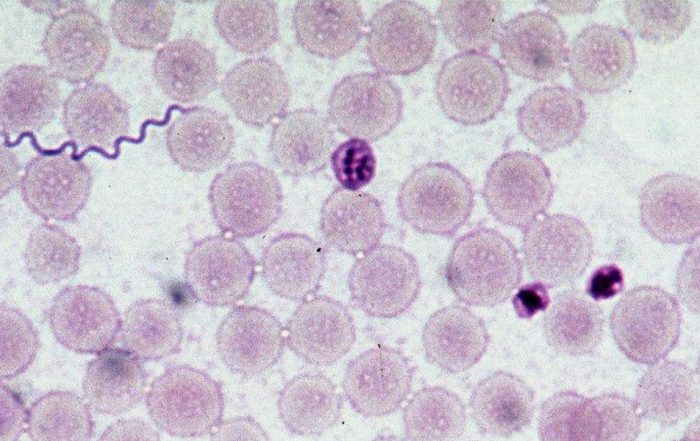
- whether there is evidence of Borrelia spp causing illness in humans in Australia
- the most appropriate laboratory diagnostic testing algorithms (best world practice) for persons who have suspected borreliosis in Australia
- the most appropriate treatments for borreliosis in Australia
- the most appropriate ways to disseminate information to health professionals and the general public on borreliosis
- the requirements for further research into borreliosis in Australia and
- the generation of appropriate new questions relevant to the terms of reference.
The Committee met on 19 March 2013 with the following outcomes:
- Suggested terms of reference for the Clinical Advisory Committee on Lyme disease to be re-drafted to incorporate members’ comments (endorsed terms of reference above).
- A Lyme disease patient advocate to be invited to participate on the CACLD.
- More information regarding borreliosis in Australia is required in order to understand the requirements to resolve issues detailed in the committee’s terms of reference. Each member of the committee will be contacted out of session to discuss issues arising about borreliosis in Australia, which will assist the development of a discussion paper on Lyme borreliosis.
- Research requirements for borreliosis in Australia to be addressed at the next CACLD meeting.
- Australian Government Department of Health and Ageing
- Karl McManus Foundation
- Lyme Disease Association of Australia* as agreed at the first committee meeting this member will attend from the second meeting
- Public Health Laboratory Network
- Communicable Diseases Network Australia
- NSW Health
- Royal College of Pathologists of Australasia
- Royal Australian College of General Practitioners
- National Health and Medical Research Council
- Australian Society for Infectious Diseases
- An Australian and International Expert
The Australian Government will continue to monitor Lyme disease, in consultation with the states and territories, through the Communicable Diseases Network Australia.
THE AIMS OF THE KARL MCMANUS
FOUNDATION INCLUDE
- To facilitate research and raise awareness of Lyme disease (borreliosis and co-infections) and other tick-borne diseases in Australia.
- Advocate for better testing and treatment of borreliosis and co-infections.
- Educate doctors and other health professionals about Lyme disease (borreliosis) and co-infections in Australia.
- Use the media to alert the public about Lyme disease (Borreliosis) and co-infections in Australia.
- Publicise that there is a potential to misdiagnose Lyme (Borreliosis) as many other serious chronic diseases like Parkinson’s disease, motor neurone disease (MND, ALS), multiple sclerosis (MS), Alzheimer’s disease, fibromyalgia and ME/chronic fatigue syndrome and autism.
Number of people in Australia who have contacted the Karl McManus Foundation with suspected cases of Lyme Disease.
|
|
387 |